
Iron IV or oral iron tablets? Compare speed, side effects, cost and who each suits, plus how Vitality BioMed in Calgary administers iron infusions on referral.
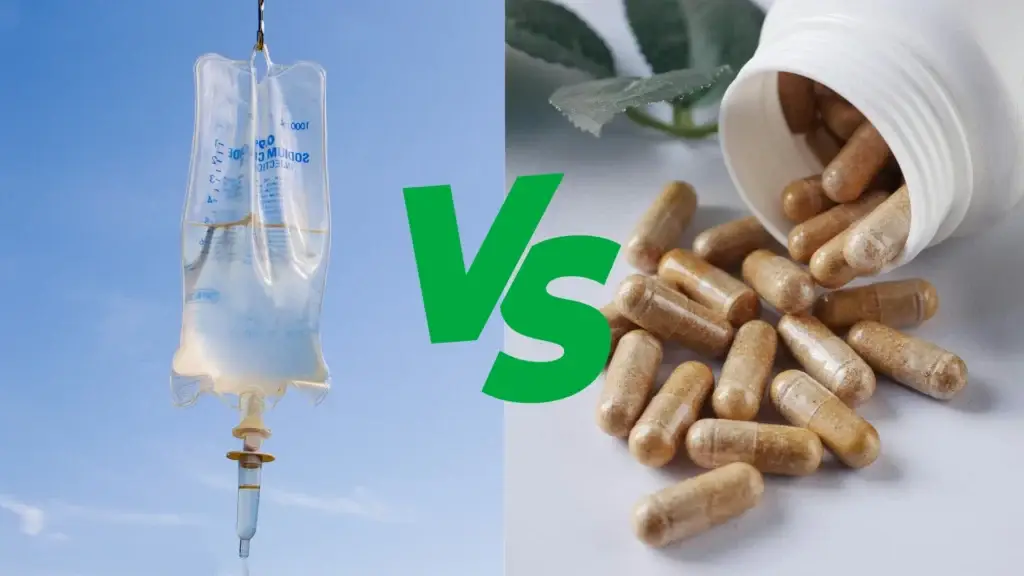
If your ferritin comes back low, you have two realistic ways to rebuild it: tablets taken at home for months, or an iron IV that delivers a full course in one to three clinic visits. Oral iron is cheap and works for most people who can absorb and tolerate it. An infusion is faster and bypasses the gut entirely, but needs a prescription, a referral and monitoring. Here is how to decide, and how Vitality BioMed in Calgary handles iron infusions.
Table of Contents
Quick answer: iron IV vs oral iron
- Oral iron first for most people: no gut condition that blocks absorption, no urgent need, and you can tolerate tablets. The BC Guidelines state oral iron is “almost always preferred” for replacement.
- Iron IV if oral iron has failed or caused intolerable side effects, if you have active inflammatory bowel disease or have had a malabsorptive bariatric procedure, if you have chronic kidney disease or heart failure with iron deficiency, if anemia is severe and needs a rapid response, or if you are in late pregnancy or facing surgery and need stores rebuilt quickly. Choosing Wisely Canada lists failure or intolerance of oral iron as the trigger for IV treatment.
How oral iron works, and why it often disappoints
Standard tablets such as ferrous sulfate 300 mg (about 60 mg elemental iron) are absorbed across the gut lining, but only roughly 10% of a dose gets through, and less if taken with coffee, tea, calcium or acid-reducing medication.
The bigger problem is hepcidin. Each oral dose raises this iron-regulating hormone, which shuts the intestinal “export door” for the next 24 to 48 hours. That is why studies support alternate-day dosing over taking several tablets daily: a single dose every second day gives higher fractional absorption and fewer gastrointestinal side effects, and Alberta Health Services now advises aiming for every-other-day dosing.
Even done well, oral replacement is slow: the same AHS guidance calls for at least three months of oral dosing to replenish stores. Nausea, constipation and black stools are why many patients quietly stop before that point.
How an iron IV works
An iron IV places iron-carbohydrate complexes directly into the bloodstream, where macrophages release the iron to transferrin, so hepcidin and an inflamed gut no longer limit the dose. Health Canada-approved products include iron sucrose (Venofer), ferric derisomaltose (Monoferric), ferumoxytol (Feraheme) and sodium ferric gluconate (Ferrlecit). Regimens differ: the Venofer product monograph describes a 1,000 mg course split over three infusions, while ferric derisomaltose can deliver 500 to 1,000 mg in a single visit according to Ontario infusion nursing guidance.
The payoff is speed. A pooled analysis of six randomized trials found IV iron raised hemoglobin by a mean of 0.90 g/dL (about 9 g/L on a Canadian lab report) more than oral iron and ferritin by roughly 107 ng/mL more.
Side-by-side comparison
Speed
Oral: at least three months to refill stores. IV: the full dose arrives in one to three visits, and trials show hemoglobin and ferritin rise faster.
Side effects
Oral: gastrointestinal upset in a large minority of users, dose-dependent. Iron IV: no gut effects, but an uncommon risk of hypersensitivity that varies by product. Health Canada’s safety review of Feraheme documented serious reactions, which is why infusions belong in a monitored clinical setting.
Low phosphate
This risk is product-specific. In the PHOSPHARE-IBD randomized trial, hypophosphataemia occurred in 51.0% of patients given ferric carboxymaltose versus 8.3% given ferric derisomaltose, and a larger phosphate drop was associated with slower improvement in fatigue scores.
Cost and access
AHS estimates oral iron at roughly $1 to $22 a month, against $225 to $675 for a month of IV product before nursing and supply costs; a Canadian cost analysis put administration of a 1,000 mg iron sucrose course at about $472. Private coverage varies, so check your plan before booking.
When oral iron is the right call
Choose tablets when your gut is healthy, anemia is absent or mild, and nothing urgent (surgery, late pregnancy) is on the calendar. Take a single dose every other day on an empty stomach, avoid tea and coffee around it, and recheck ferritin when your prescriber advises. If it has not moved, investigate absorption or ongoing blood loss rather than adding more tablets.
When an iron IV is the right call
Consider an iron IV when:
- You have tried oral iron for several weeks and ferritin has not budged, or side effects made you stop.
- You have active Crohn’s disease or ulcerative colitis, or have had a malabsorptive bariatric procedure, since inflammation and reduced absorption both work against tablets.
- You have chronic kidney disease or heart failure with iron deficiency.
- You are in late pregnancy and need stores rebuilt quickly; the BC Guidelines consider IV iron safe in the second and third trimesters.
- Your anemia is severe, or your prescriber needs stores rebuilt before an operation or to avoid a transfusion.
Québec’s INESSS protocol defines deficiency as ferritin under 30 µg/L, or under 100 µg/L with inflammation, so a full iron panel should guide the call.
How iron IV therapy works at Vitality BioMed
Our Calgary clinic administers iron infusions on referral. Because IV iron is a prescription medication, the referral must come from an MD or nurse practitioner and include a CBC, ferritin and transferrin saturation (TSAT) from within the last 30 days. The prescriber chooses the product, you pick it up from a pharmacy and bring it to your appointment, and the prescriber remains responsible for investigating the cause and ordering follow-up labs. Referrals go through our iron IV referral page, by email to info@vitalitybiomed.com or by fax to 403-538-6593, and we ask you to call 403-300-1698 to book so the right staff member is scheduled.
On infusion day, our nursing team, led by Maddison Miller, verifies the prescription, places the line and monitors you during and after the infusion. Plan for roughly 90 minutes.
What sets our approach apart is the next question: why did your iron fall? Low ferritin is a symptom, not a diagnosis. Our functional medicine team, including Dr. Diana Craciunescu, MD, and Dr. Cheryl Cooper, ND, uses blood chemistry, stool and gut-health analysis and hormone testing to look for possible drivers such as digestive conditions, heavy periods linked to hormonal imbalance, or a diet that is not meeting demand. If fatigue persists after iron is corrected, we may assess B12 and vitamin D and offer vitamin injections where blood work supports them.
Making the decision
Never tried oral iron and have no absorption problem? Start there, dose it correctly and retest. Already failed, or in one of the high-need groups above? Ask your physician or nurse practitioner about an iron IV referral, then contact our Calgary clinic to arrange the infusion or a complimentary 15-minute consultation.
Frequently asked questions
How many iron IV sessions will I need?
It depends on the product and the total dose. AHS calculates the replacement dose from body weight and the hemoglobin gap; the Venofer monograph example uses three infusions, while ferric derisomaltose can deliver 500 to 1,000 mg in one visit.
Is iron IV safe in pregnancy?
Provincial guidance in British Columbia considers IV iron safe in the second and third trimesters; the decision should sit with your obstetric care provider.
How soon will I feel better after an iron IV?
In trials, hemoglobin and ferritin rose faster over the following weeks with IV iron than with tablets; how you feel depends on your starting point. Follow-up blood work confirms the response, and our hemoglobin timing guide walks through what to expect.